Premiere in Saxon teacher training: In the winter semester 2025/26, the cooperative degree course "Teaching Qualification for Secondary Schools with Special Needs Education" will start for the first time at Zittau/Görlitz University of Applied Sciences and Leipzig University.
Current status and initial developments
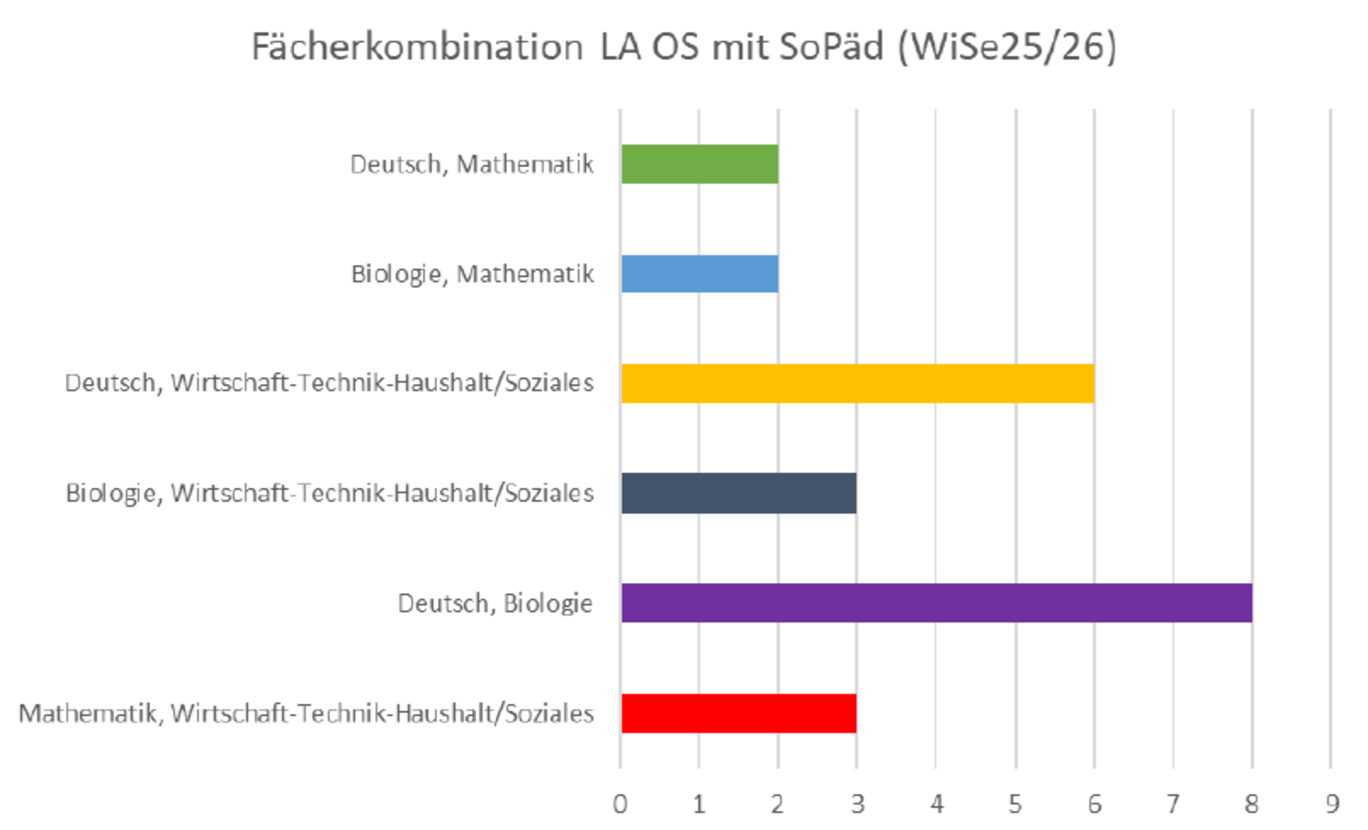
At the end of September 2025, Zittau/Görlitz University of Applied Sciences and Leipzig University signed the administrative agreement for the new cooperative degree course in secondary school teaching with special needs education. This sent a clear signal for innovation in teacher training in Saxony. The course is gathering pace - driven by great motivation, high quality standards and the common goal of training teachers for the East Saxon region and for an inclusive school landscape. The program officially started on 1 October with 24 students at the Zittau/Görlitz University of Applied Sciences. The students chose different subject combinations that cover a broad spectrum of educational areas. The combinations of German/biology, German/economics-technology-business/social studies and biology/economics-technology-business/social studies were particularly popular.
Presentation of cooperative elements in the responsibility for the degree program
The close cooperation between the Zittau/Görlitz University of Applied Sciences and Leipzig University is of central importance for the joint responsibility for the teacher training course. Coordination in committees such as the study commission, study conference and steering committee as well as exchange formats between the academic administrations of both institutions ensure coherent course development. Regular meetings at both locations and digital exchange formats ensure a continuous flow of information and joint quality assurance. As Saxony only allows universities to offer teacher training courses with a state examination, the cooperation between Zittau/Görlitz University of Applied Sciences and Leipzig University forms the necessary basis for a legally recognized, content-coordinated and high-quality range of courses.
Inclusion as a concept - and as lived practice
The cooperative study program focuses on inclusion as a central theme and guiding principle. Consequently, a conscious examination of diversity as a resource is supported, whereby the totality of individual differences between people, for example in terms of origin, gender, language, abilities, social situation or beliefs, becomes the guiding principle of the course. This diversity is not only reflected in the composition of the student body, but also in the content and structure of the course itself: Inclusion-related perspectives are incorporated into educational science, subject-specific and subject-didactic modules and can be experienced in practice in teaching methods, collaboration and reflection processes. The cooperation model also combines two secondary school subjects, such as German, biology, mathematics or business, technology, home economics and social studies, with the special educational focus on learning as a teacher training subject.
At the same time, the course is exemplary of the growing diversity of paths into the teaching profession: in addition to traditional university courses, alternative training formats are increasingly emerging - from lateral entry to dual models and cooperation between universities and colleges. The degree course in Zittau/Görlitz picks up on this development and creates a model that meets both the needs of the school system and the realities of future teachers' lives by combining an academic foundation and regional practical orientation in compulsory and optional school internships. The result is a study program that brings the idea of diversity to life even before the classroom - in terms of access, content and the students' learning paths.
Inclusion as a response to current challenges
Teacher training and prospective students are facing major challenges: A shortage of teachers, increasing heterogeneity in classes and the mandate for inclusive teaching require new concepts. This is precisely where the cooperative degree course comes in. With its focus on inclusion pedagogy and inclusion didactics in educational sciences, the subjects and the special focus on learning, it takes into account the requirement of the UN Convention on the Rights of Persons with Disabilities to provide education for all children and young people. The combination of special educational and subject-specific qualifications creates teachers who understand and can shape diversity as an educational resource.
At the same time, the course responds to the special conditions of rural areas in eastern Saxony. By training directly in the region, future teachers are integrated into local school networks at an early stage. In this way, the course contributes to strengthening the regional educational landscape, promotes sustainable cooperation between schools and the university and supports the long-term safeguarding of teaching provision in Upper Lusatia.
Authors: Jolien Kirchner (Leipzig University) and Katrin Lyko (Zittau/Görlitz University of Applied Sciences) - study coordinators for the teacher training course for secondary schools with special needs education