From June 16 to 20, it's that time again - the digital ballot boxes are open and students will be elected to the Faculty Councils, Faculty Student Committees and the Senate of Zittau/Görlitz University of Applied Sciences. We are looking for students who are passionate about getting involved and want to tackle politics big and small. In this article, you can find out why you should run for at least one of these committees by May 19.

Author: Marcel Kremser
Do you have a healthy critical attitude, always see something to improve and like to proactively contribute your opinion and ideas? Then an honorary position on a university policy committee is your chance.
On the Faculty Council, you can help shape the framework conditions for studying and teaching, whether it's the course of studies, the further development of degree programmes and modules or organizational problems that arise. As a student representative, you should contribute your own ideas and suggestions and represent the interests of your fellow students. You have many opportunities and freedoms - not least to shape student life on and off campus.
While you can not only gain a lot of experience in event and project management by volunteering in the Faculty Student Committee at various events, the FSR also makes many important decisions regarding student life - in short: that you and your fellow students have a good time.
Members with voting rights - including, of course, the elected students - determine in the Faculty Council for example, on the use of faculty resources. This includes not only the distribution of budgets, but also, for example, the allocation of rooms or staff. We also deal with essential research and teaching issues in the FR, such as planning evaluations, which we students are always allowed to fill in diligently. But complaints about quality problems in classes / courses or the nature of a lecturer have also landed on the agenda. However, the most exciting questions are those that directly concern the degree programs. These are not only examination regulations (how do examinations take place and what form do you complete a module in?) but also study regulations (which modules do I have to complete in the degree program, which ones can I possibly choose?)
All in all, the student members should incorporate the views, requirements and needs of the students into the faculty's decisions. As a member of the Faculty Council, you represent the opinions of other fellow students to the faculty or university.
Do you like to get involved, look forward to being heard by decision-makers, join in discussions and enjoy representing points of view and tackling problems? Then put your name forward as a candidate for the "FR" and step on the gas!
By the way: If you want to experience the really big university politics, then run directly for the Senate or the Extended Senate of the university. What is that? You can find the answers in the Saxon University Freedom Act in §81 and 81a.
The Faculty Student Committee consists only of students. Do you have an open ear and like to help other people? As a member of the FSR, you are first and foremost the contact person for all students in the faculty and provide advice on everything to do with the university or faculty.
Are you always in a good mood, creative and like to organize things?
As part of a cool group, you organize various events: first-year events, lecture hall cinema, games evenings and much more.
As well as working at the interface between lecturers and students, you'll also do a lot for your fellow volunteers. And you get a lot of respect for your voluntary work on campus.
But respect is just one of the few advantages of being involved in the committees. "And all this for no money?" - Yes, it's all voluntary. The experience you gain from volunteering, the soft skills you develop, the memories you create with a unique group will last a lifetime and significantly increase your value. Personally in everyday life, but also on the job market - on the way to becoming a future manager. The former face of our FSR once told me that his current employer was very impressed by his voluntary work on several (!) university policy committees and the qualifications and skills he had acquired as a result.
Volunteering teaches you how to deal with finances, set up projects and take part in important decision-making processes. The latter teaches you how to back up your own opinions with arguments and assert them. You therefore develop a certain self-confidence, a certain fluency and a more confident way of arguing. However, as this often happens on the "big stage" (in front of the Faculty Council or Dean's Office), you will also gain a glimpse behind the scenes. You will recognize how the university committees function, act and work. The same applies to the university itself.
Another advantage: you get to know your lecturers from a completely different perspective. The lecturer is always totally stubborn in the class / course? It's possible that he/she isn't stubborn at all outside the classroom, but is really cool and relaxed. What sounds a bit absurd at first is actually a reality! By volunteering in the FSR or FR, you will get to know almost all of your lecturers from a different perspective. So stand for election to one of the committees by May 19 and not only experience the university differently through volunteering. You will also learn and develop a lot through volunteering.
On a personal level, it also has the advantage that you can expand your social network within the university as well as externally.
If you are a BAföG recipient, you will be able to extend your studies by at least one semester beyond the standard period of study so that you can carry out your voluntary work with the best of your knowledge and conscience.
Only benefits and still in doubt? Register for meetings in advance and then you can get a taste of the work of the committees. This also applies to the Faculty Council, which you generally hear less about. The committees are always happy to welcome interested people and new faces who dare to express their opinions. Even if you don't have the right to vote at first, your opinion will make a difference.
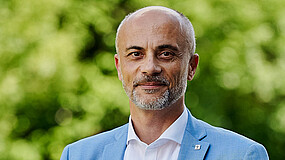
Our Dean Prof. Maiwald says:
"The work in FSR and FR is exciting and it's worth getting involved - whether for yourself or for and with others. The cooperation between the two committees will be intensified to ensure a better exchange."
And if you need a little longer to think about it, that's no problem at all! Keep this article in a good place and do it next year when it says: candidates wanted for FSR, FR and Senate!
And even if these committees don't appeal to you, but you are still interested in student work (possibly also an honorary position) at the university: Study commissions, which discuss course-related topics before the Faculty Council, or the Examination Board are also regularly looking for student representatives. Just keep your ears open when you are approached by those responsible for your degree program.
Has this piqued your interest? Even if I repeat myself: Then you should apply for the election online by May 19. You can find all the information you need in the email from the election officer (dated 6.5.25).
You don't even need to write a letter of application or motivation. Just three clicks to become a candidate. Open the link in the email. Select the committee or committees. Send it off. As you can see, the path to an honorary position and thus to personal development is very easy. It's very simple and doesn't hurt ;-)
And if you don't want to stand for election yourself, you should choose a representative for the respective committee as conscientiously as possible. According to the email, the election period begins on June 16 and ends on June 20. Check your mailbox regularly for news.
* Adapted and updated version of the article from May 2023