
About university politics, committee work and student engagement
Admittedly, I didn't vote in the last committee elections. Ashes on my head! The disenchantment with politics of our generation is repeatedly denounced, and rightly so in this case. That's partly because I, Alexandra, a tourism management student, simply didn't have the elections on my radar: online and in the middle of exam time.
But that's a poor excuse. It's actually because I have absolutely no idea what committees are all about. And if I'm going to vote, I want to know what, who and for what! So I want to make up for my disenchantment with politics and delve into the depths of university politics. Above all, I want to know what motivates students to get involved alongside their studies, part-time job and earned free time.
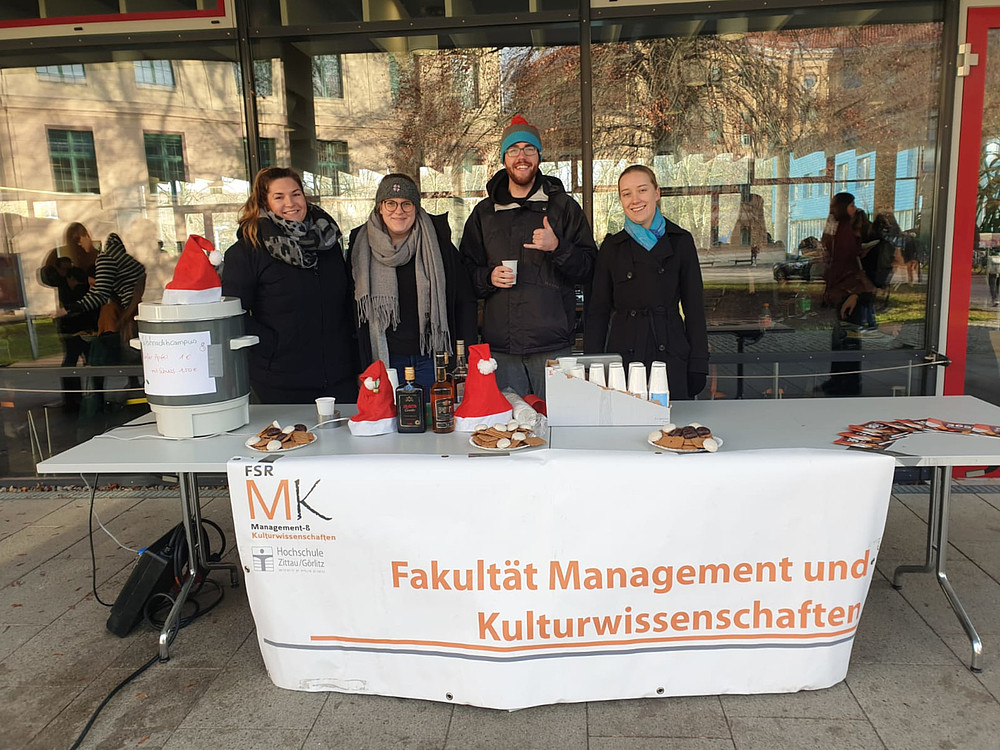
In order for democracy to be practiced in the university context, students must also be able to have a say. That's why there are always a few places for student representatives on all decision-making committees. As the name suggests, they represent the interests of the students. For example, in the Faculty Student Committees (FSR). Each faculty has its own FSR and all members of a faculty can be elected to the respective Faculty Student Committee by their fellow students.
Nikola studies Economics and Languages and because her degree program is so small, she wants to give it a voice in the FSR MK:
"We wanted to be seen more because there are so few of us. I chose the FSR because the organization and atmosphere there are relaxed."
But what do you do in the FSR to represent your fellow students?
"We're not just a point of contact for other MK students if they have difficulties, we also organize various events such as Freshers' Week, the "Briefwichte" campaign or "Make It To The Top"."
The Faculty Student Committees then send representatives to the Student Council. The StuRa then deals with cross-faculty / trans-faculty support for students. Anyone can come to the public meetings or the newly established consultation hours to get rid of problems or suggestions. I tried out the latter straight away to ask Uta and Carl my questions. Carl studies molecular biotechnology and explained to me what the StuRa actually does:
"We try to get all students through the crisis period in a good way, be it with this office hour or the laptop rental service. We organize university-wide events, also to better connect the locations, and try to have a positive impact on student life in Görlitz and Zittau".
To this end, our student representatives are also in weekly contact with the university management at the Rectorate meeting.
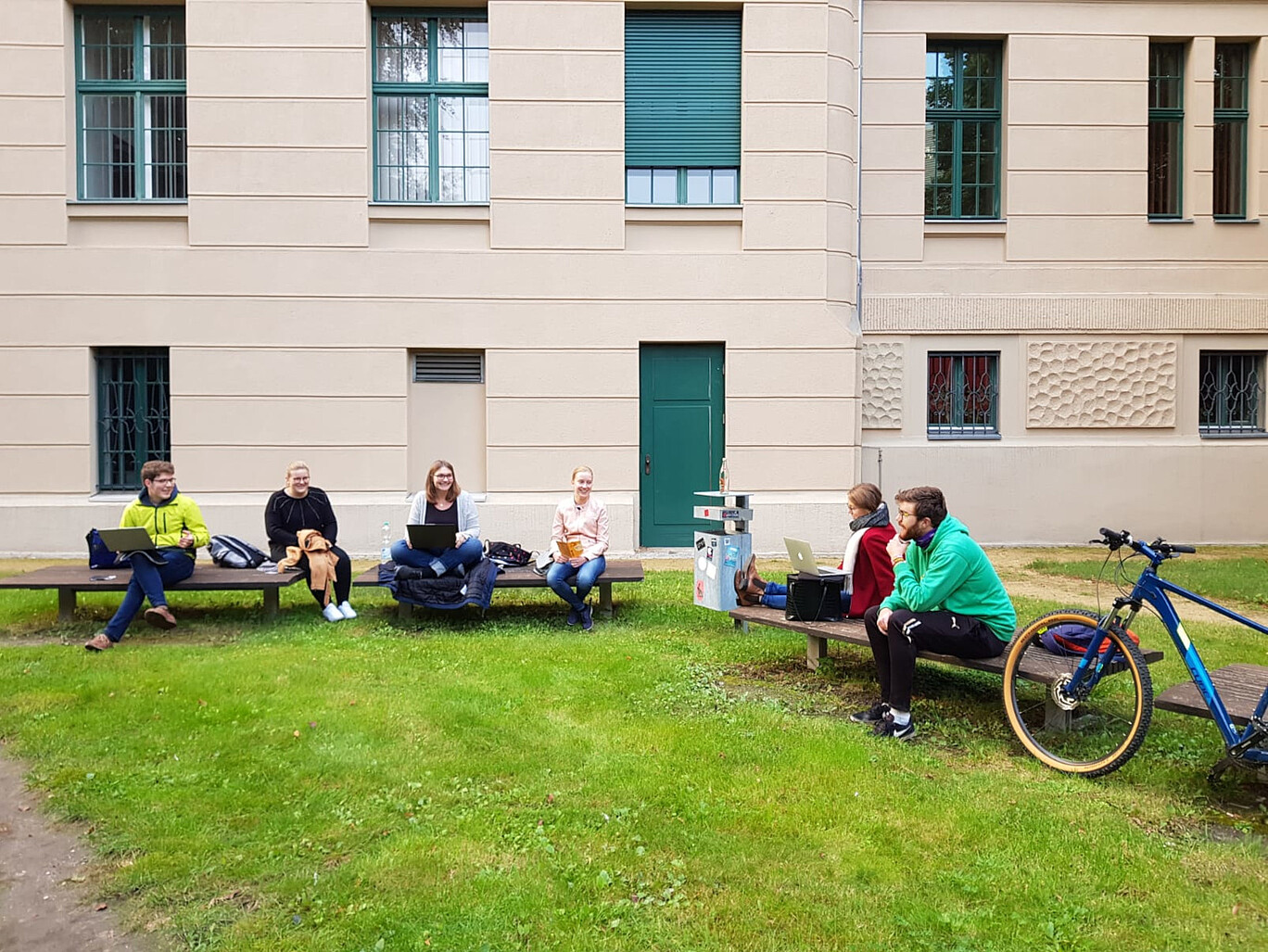
These are the committees that are made up exclusively of students. But there are also the Faculty Councils, the Study Commission and the Examination Board as well as the Senate and Extended Senate, in which a few student seats are kept warm alongside professors and university staff.
The Faculty Council is responsible for everything that has anything to do with the respective faculty. For example, issuing and amending examination and study regulations or inventing new degree programs or changing existing ones. To do this, however, the Faculty Council must also coordinate with the Study Commission.
Although Theresa is studying Health Management, she sits on the Study Commission for International Business Communication. This degree course is still in its infancy and offers Theresa the opportunity to get fully involved:
"We represent the interests of the students in all votes in the StuKo, so: are the modules well distributed? Is the load too heavy for the students? How are the exams distributed among the examination types? Is there an NC or not? I can then express my opinion on the topics and we discuss points of criticism. After all, every decision prepared by the lecturers is voted on."
Luca not only stands up for his fellow students in the StuKo, but also in the Examination Board for Tourism Management.
"On the committee, we deal with applications from students who want to retake their exams, extend deadlines or have credits recognized. We examine applications to change the examination regulations or individual forms of examination. I think it's important to be able to vote as a student representative. We have a different perspective than the lecturers. So we can contribute a different perspective and ultimately help the students."
And what about the Senate now? Cornelius (culture and management student, over-committed in FSR MK, StuRa and everywhere else) explained this to me:
"The Senate is actually the most important body of the HSZG. For example, it approves the business plan, is responsible for teaching evaluations and all cross-faculty / trans-faculty decisions. The Extended Senate actually only has one task: electing and dismissing the Rector."
But now to the real question: Why do you invest so much time in a voluntary position? Is it because it looks good on your application? Uta studies computer science and is involved in the StuRa. She says:
"It's interesting to see how politics works, even if it's "just" university politics. In addition, important things are discussed and you don't have to passively accept everything, but can improve the things that are close to your heart. It's a bit altruistic: what didn't go so well in my studies, I want to improve for the next generation."
Theresa in the StuKo thinks the same:
"I think it's important to get involved and create positive influences for future students based on your experiences. To assert the students' voice constructively and get involved in this way"
Nikola also said:
"It's fun, you have the opportunity to influence events a bit, help other students and meet new people."
But isn't this kind of thing incredibly time-consuming? Carl is also head of the finance department at StuRa and his answer is clear:
"Yes and no. You have to set priorities and if you can manage your studies to some extent, it's fine. If I don't have to be there for a lecture, then I can take on the role of head of department." By the way, working as a student representative can also lead to recognition of a longer standard period of study.
Anyone can complain, so if you want to change something that's bothering you, why not drop by one of these committees? At this point, a big thank you to all our student representatives, "over-committed" people and facilitators who take the time to give us students a voice.