Transfer network Saxony5 looks back on five years and receives funding approval for a further five years.
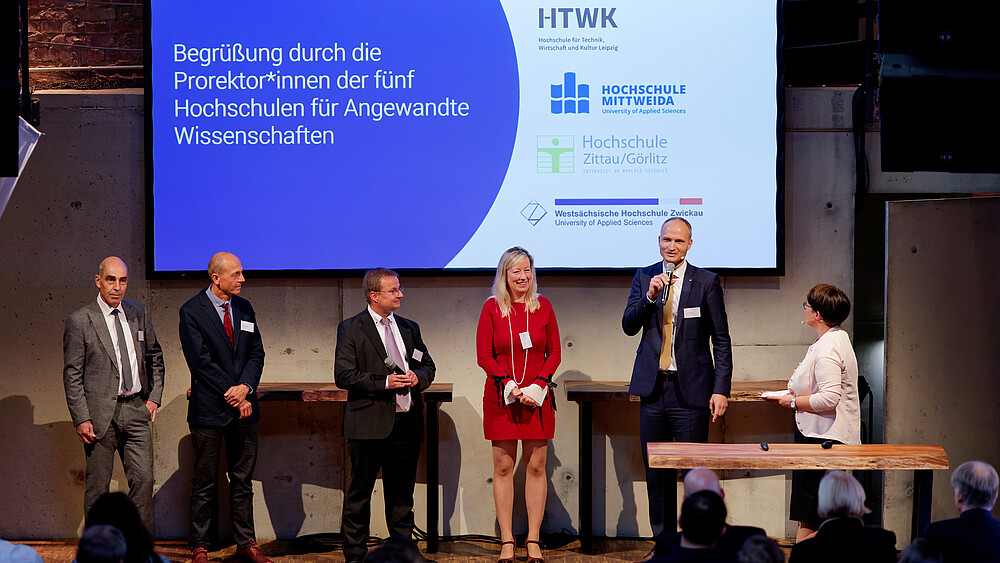
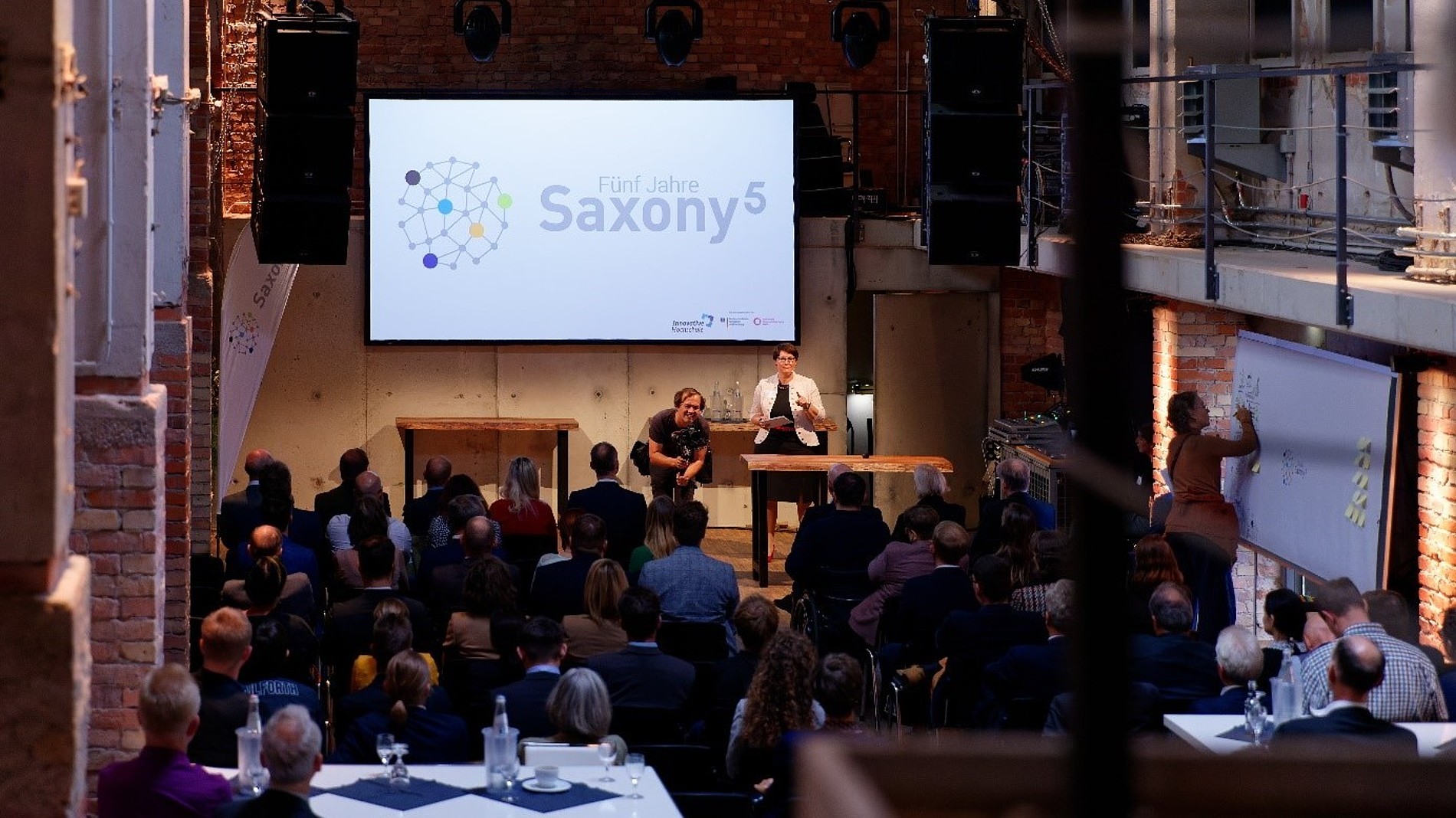
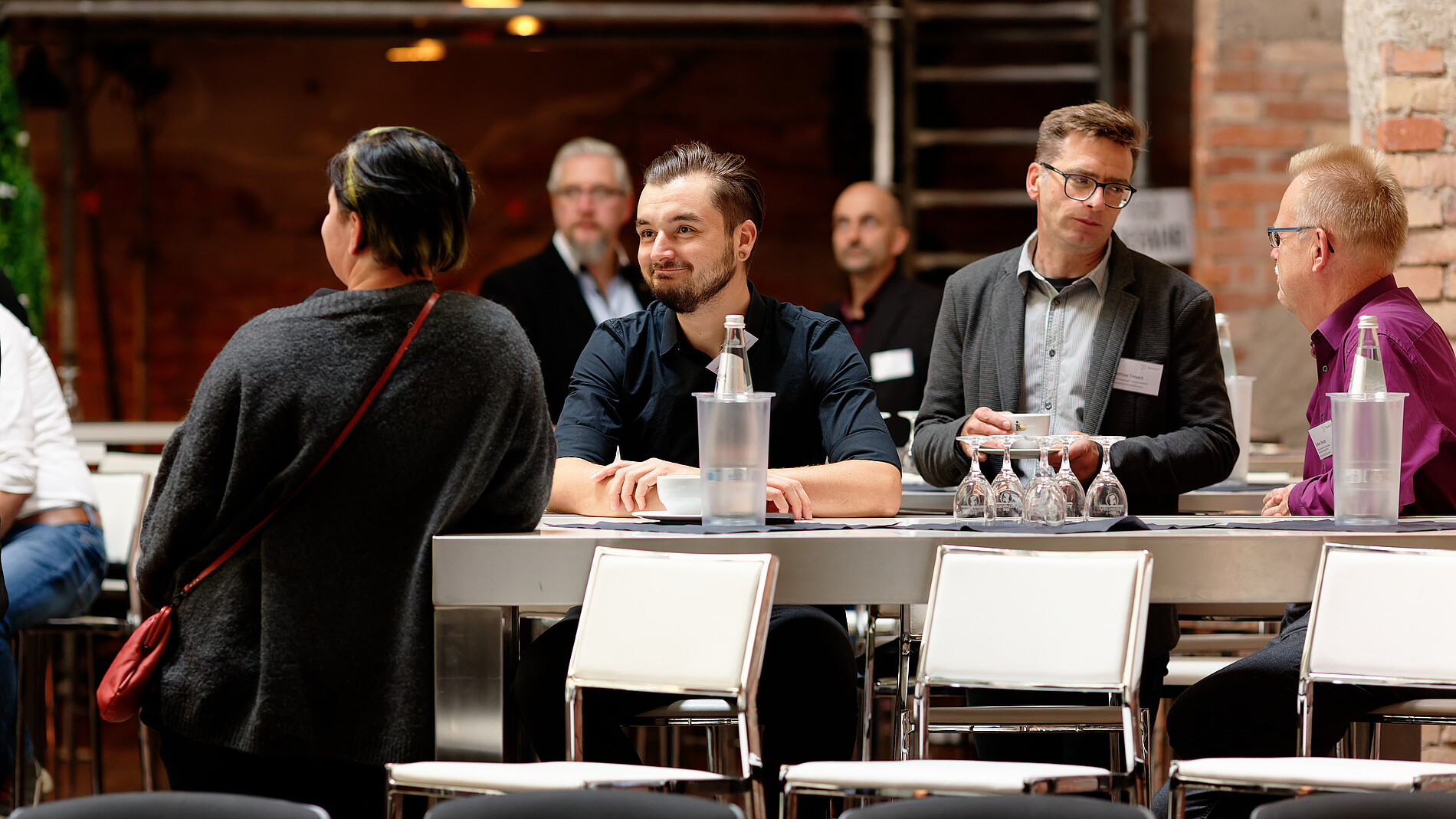
In recent weeks, the Saxony5 transfer network had two reasons to celebrate: firstly, around 100 project participants from Saxony's universities of applied sciences (HAW) and partners from business and society came together to celebrate the fifth anniversary of the Saxony5 transfer network. The network was also delighted to receive official funding approval for a further five years of effective knowledge and technology transfer work.
Transfer activities in Saxony have been increasing noticeably over the past five years. The Saxon transfer network Saxony5with its wide range of activities is one of the reasons for this. Since 2018, Dresden University of Applied Sciences, Leipzig University of Applied Sciences, Mittweida University of Applied Sciences, Zittau/Görlitz University of Applied Sciences and Zwickau University of Applied Sciences have been working together to promote knowledge and technology transfer in Saxony and strengthen the region in the long term.
The sub-project at the Görlitz site of the "Factory of the Future" co-creation lab has provided advice and support in recent years, particularly on the topics of human-technology interaction from a user perspective and the world of work 4.0 from a social science and gerontological perspective. The GAT Institute with its AAL Lab made a significant contribution to the transfer process by not only creating an interface between technology and senior citizens, but also by helping to transfer research findings into practice. In addition to older people and their relatives, the transfer activities also raised awareness of digital technologies in old age among housing companies, care service providers, healthcare organizations, politicians and the skilled trades. The topic of co-creation and participatory design has thus become a central flagship of the GAT Institute.
On Tuesday, September 27, 2022, the association celebrated its fifth anniversary at the Altes Pumpenhaus in Dresden, looked back on its achievements and toasted the end of the first project phase. However, it was not a farewell, but also an excited look into the future, as Saxony5 had applied for a continuation in a second project phase. Back in the summer, the Federal Ministry let it be known that this application had convinced the experts and that funding could be expected.
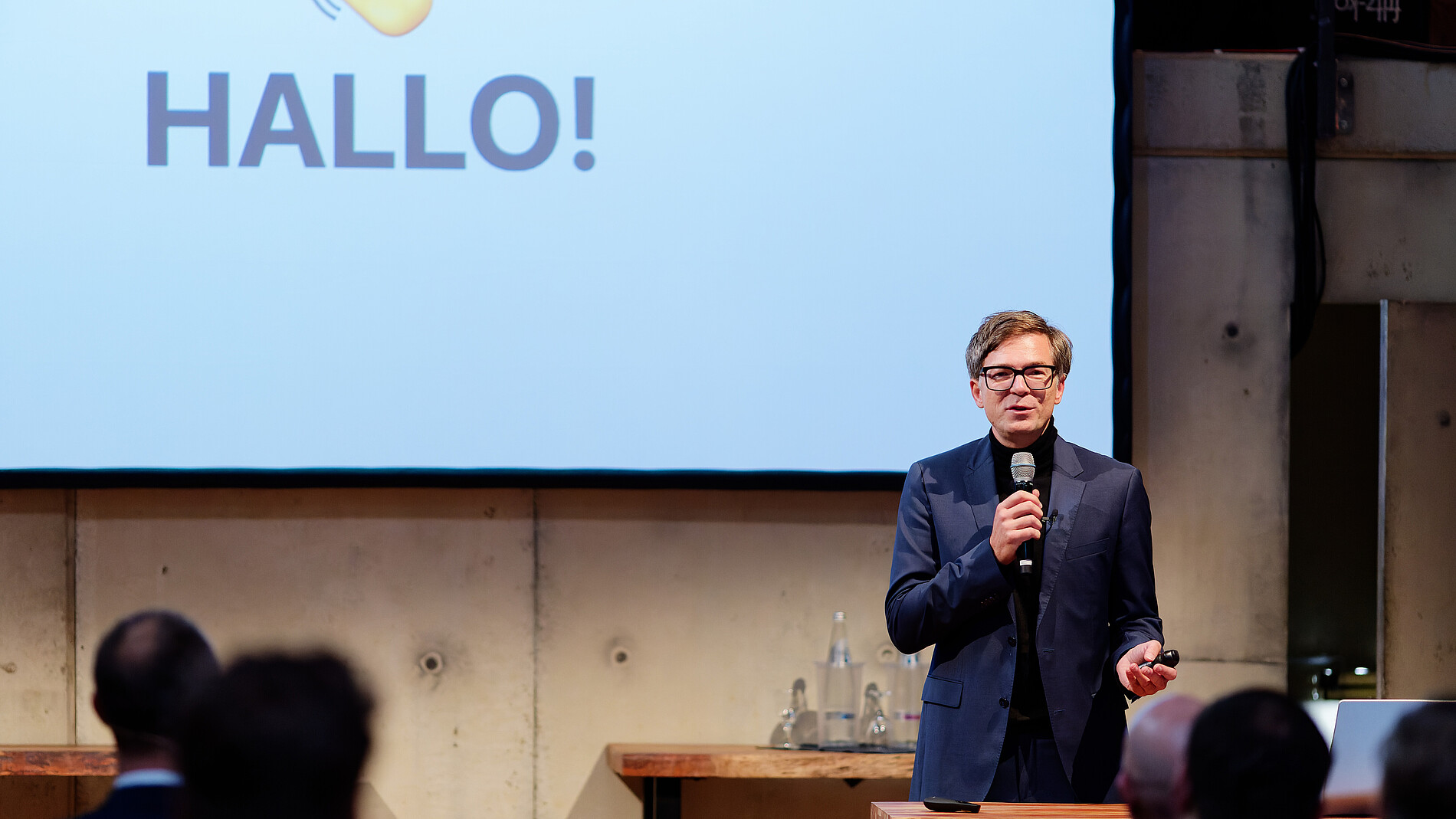
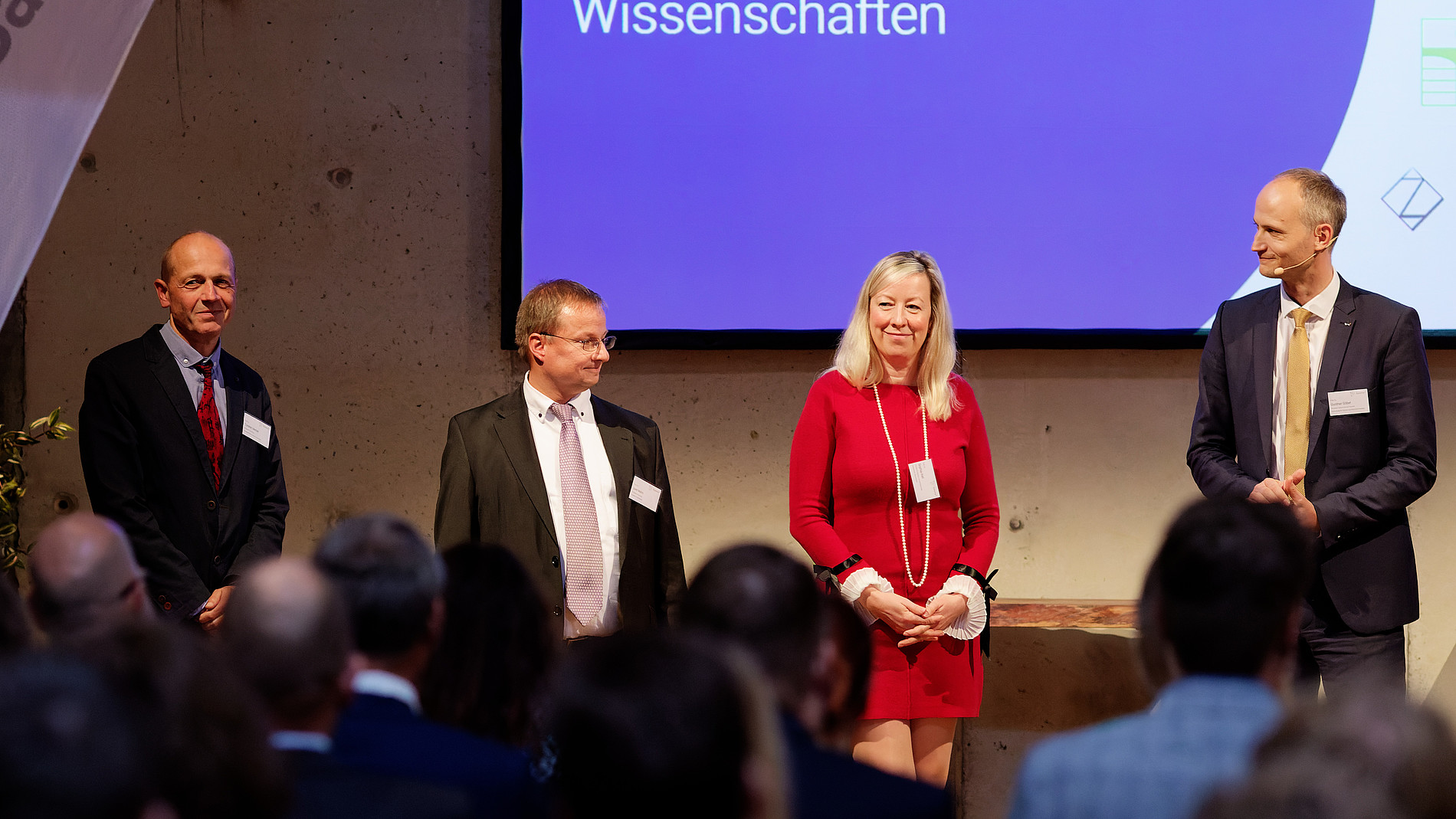
In addition to speeches by Project Managing Director Susanne Stump and the Vice Presidents for Research at the HAW, with Prof. Sophia Keil (Vice President Education and International Affairs) representing Zittau/Görlitz University of Applied Sciences, the Saxon State Minister for Science Sebastian Gemkow also conveyed his greetings. One highlight was the keynote speech by science presenter Ralph Casper (Quarks, Wissen macht Ah! or Sendung mit der Maus) on the topic of science communication.
The second reason for joy reached those responsible last week: the official grant notifications for the follow-up project were received by the five Saxon universities, thus providing the hoped-for security for the future. Prof. Gunther Göbel, overall project manager of Saxony5, is delighted: "Now we can prepare everything so that things can continue smoothly in 2023. It is important that the economy and society benefit more from the many results of university research. That's why we want to further expand knowledge and technology transfer in Saxony and, above all, facilitate its continuation."
For the follow-up project phase from January 2023 to 2027, Saxony5 is focusing on the topic of "sustainability". As Prof. Raj Kollmorgen, project manager for the Zittau/Görlitz University of Applied Sciences and Vice-Rector for Research, emphasizes, "the focus on sustainability not only means integrating ecological, economic and social sustainability aspects into the transfer projects, but also the structured expansion of transfer instruments, taking into account their long-term effects and institutionalization opportunities in the regions". As the event emphasized, knowledge and technology transfer between universities, society and industry is not a sure-fire success. Therefore, the findings of the first project phase will be used to drive forward the change process in the universities and to enable permanent establishment.
There are already plenty of ideas for this at the HSZG. Prof. Keil, for example, has suggested that Saxony5 could play a role in student trainingin the future:
"As Vice President for Education and International Affairs, my wish for the next project phase is that we involve our students even more in the Saxony5 project, as they will be our best ambassadors for knowledge and technology transfer to regional, German and global companies and organizations. I see a possible approach to achieving this in incorporating more research-oriented modules into teaching." Prof. Sophia Keil, Vice President Education and International Affairs
”