The time had come for us Master's students of International Tourism Management: the long-awaited excursion abroad for the "Future Workshop" module was about to begin. For eleven days, we and our companions immersed ourselves in the Asian country to get to grips with tourism development away from the lectures.[caption id="attachment_1079" align="alignnone" width="813"]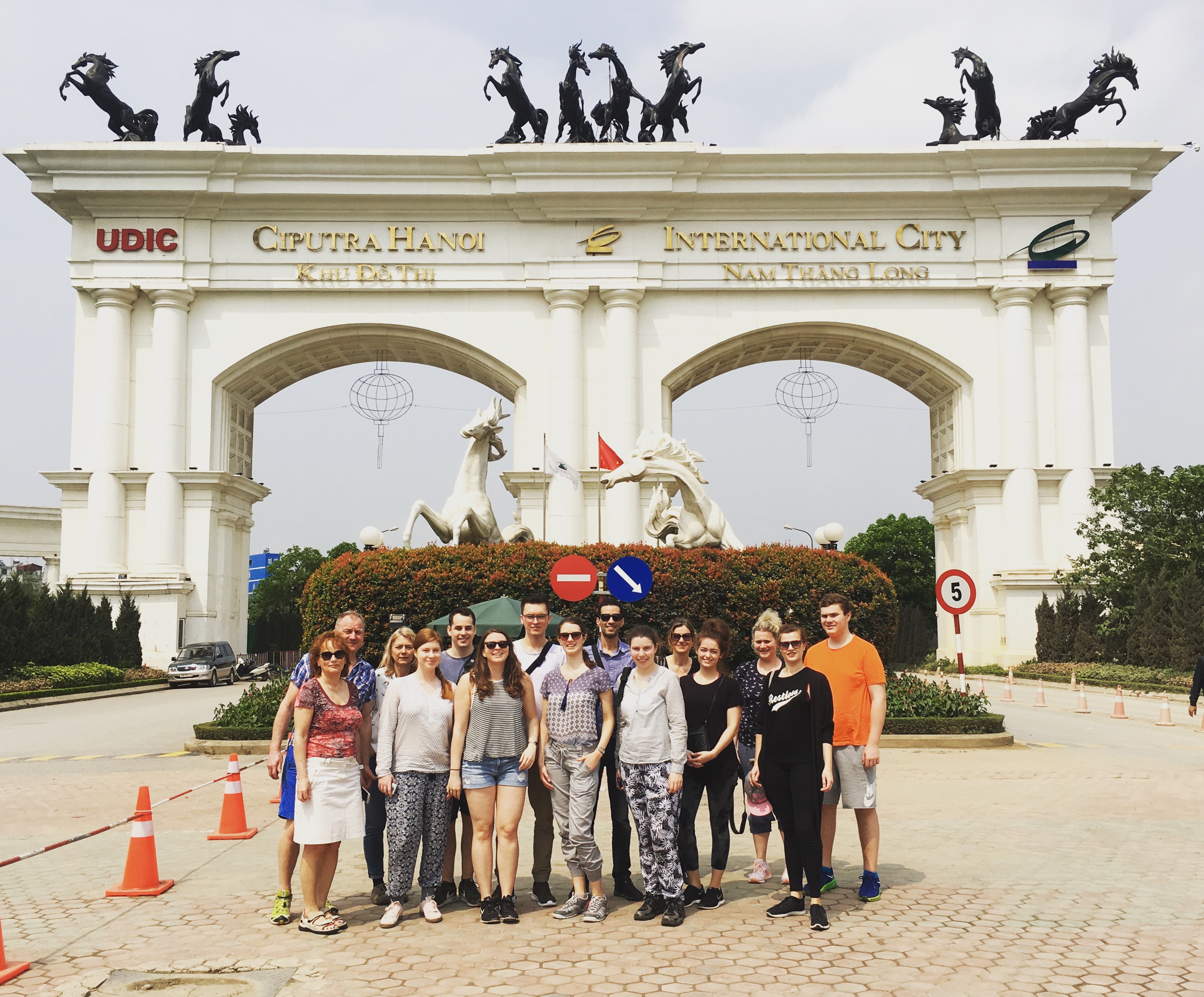 Group photo © Mira Nausner[/caption] HanoiFromBerlin, we took off on our flight to Hanoi with two stopovers. Culturally, we went straight from the airport to the water puppet theater. This art form is practically a must-see on any trip to Vietnam. We started the second day with a city tour. We followed the city's development, got an idea of Vietnamese visions and discovered traditional places.[caption id="attachment_1073" align="alignnone" width="800"]
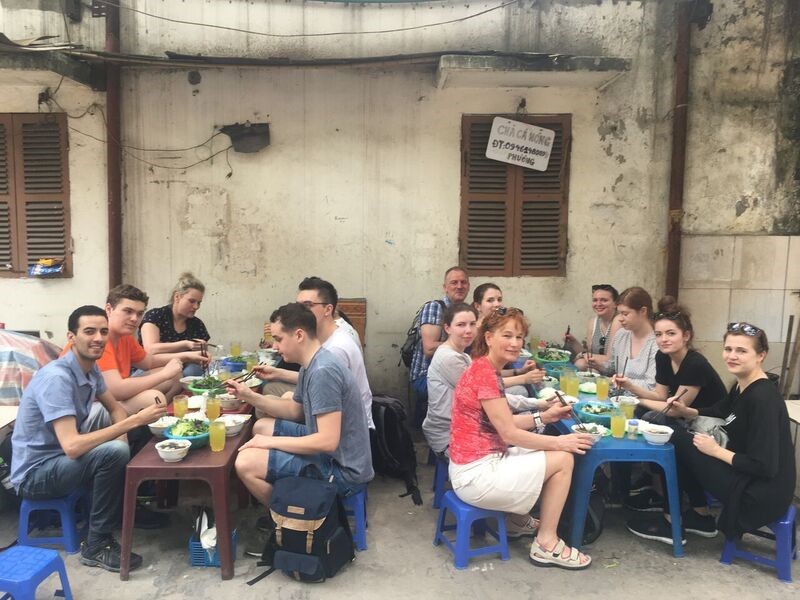 Lunch in Hanoi © Mira Nausner[/caption] SapaWe continued ourstudy trip through northern Vietnam by night train. A new, formative experience for many. "It's okay, but you don't have to do it again" - was the general conclusion. We reached Lao Cai early in the morning (very early by student standards) to travel from there for a good hour to the mountainous region of Sapa. After a hearty breakfast, we went on our first trek to Ta Van village. Passing rice fields and always accompanied by the H'mong, we looked into the lives of the ethnic minorities.[caption id="attachment_1083" align="alignnone" width="805"]
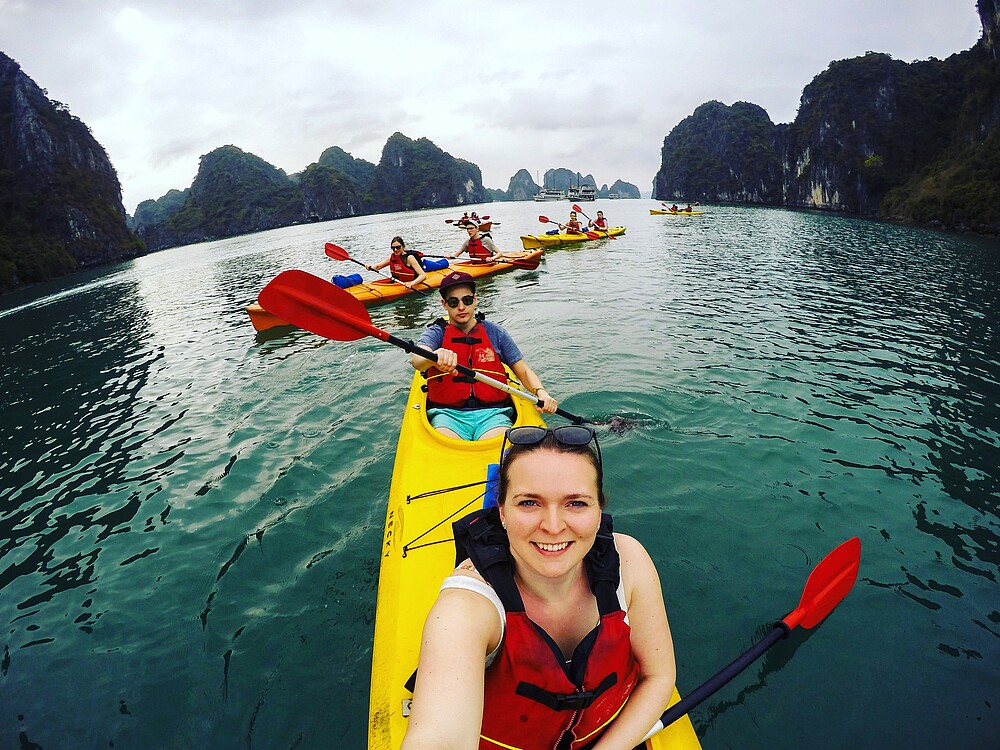
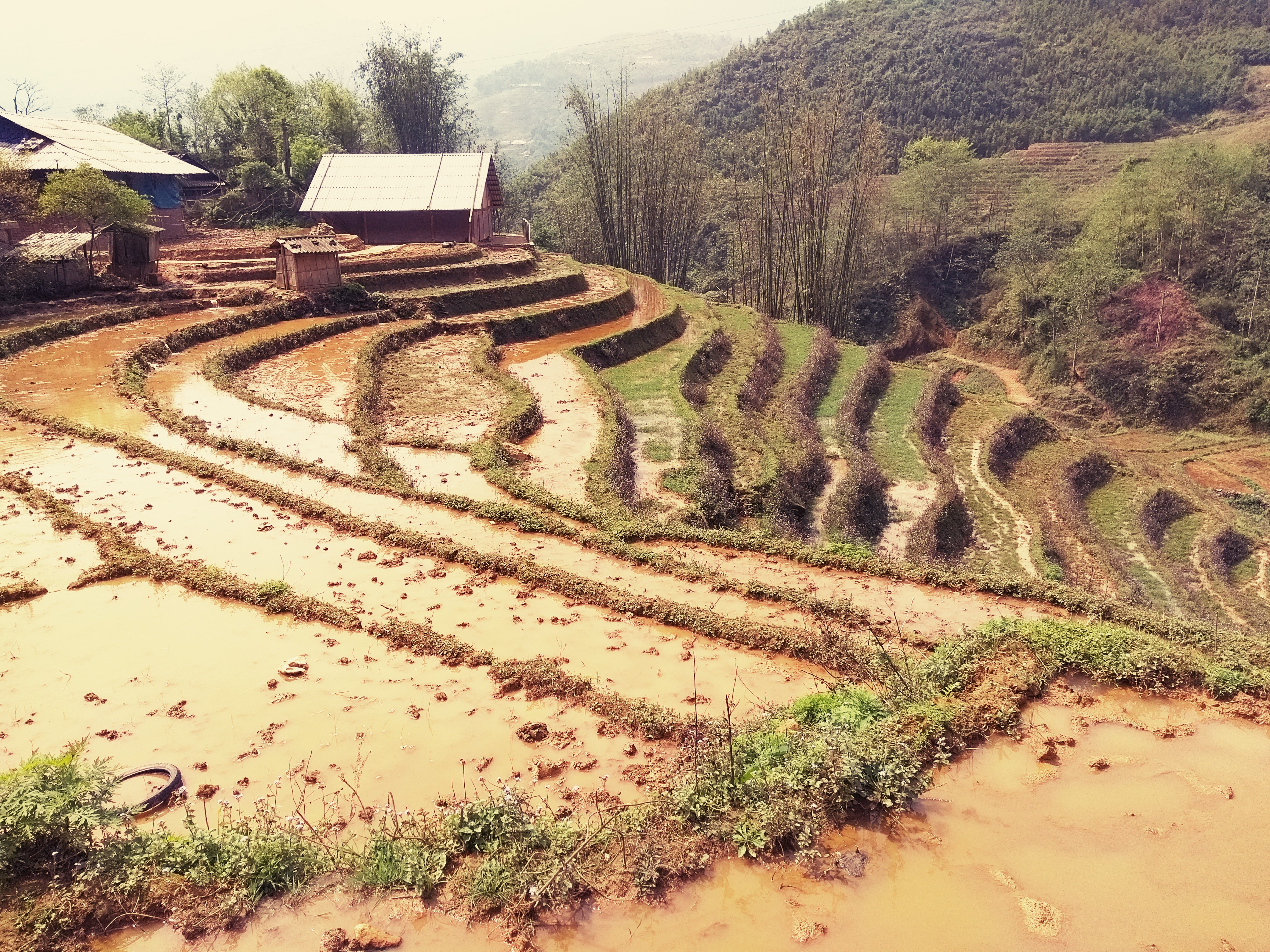 Rice terraces near Sapa © Arlene Gärtner[/caption] Ha Long Bay"The" natural heritage of North Vietnam was of course not to be missed on our excursion. With our critical, tourist eye, we inspected the UNESCO World Heritage Site for almost 24 hours. In addition to kayaking, tai chi and floodlight fishing, we visited the floating fishing villages and an oyster farm. However, we also discussed the downsides of tourism.[caption id="attachment_1078" align="alignnone" width="814"]
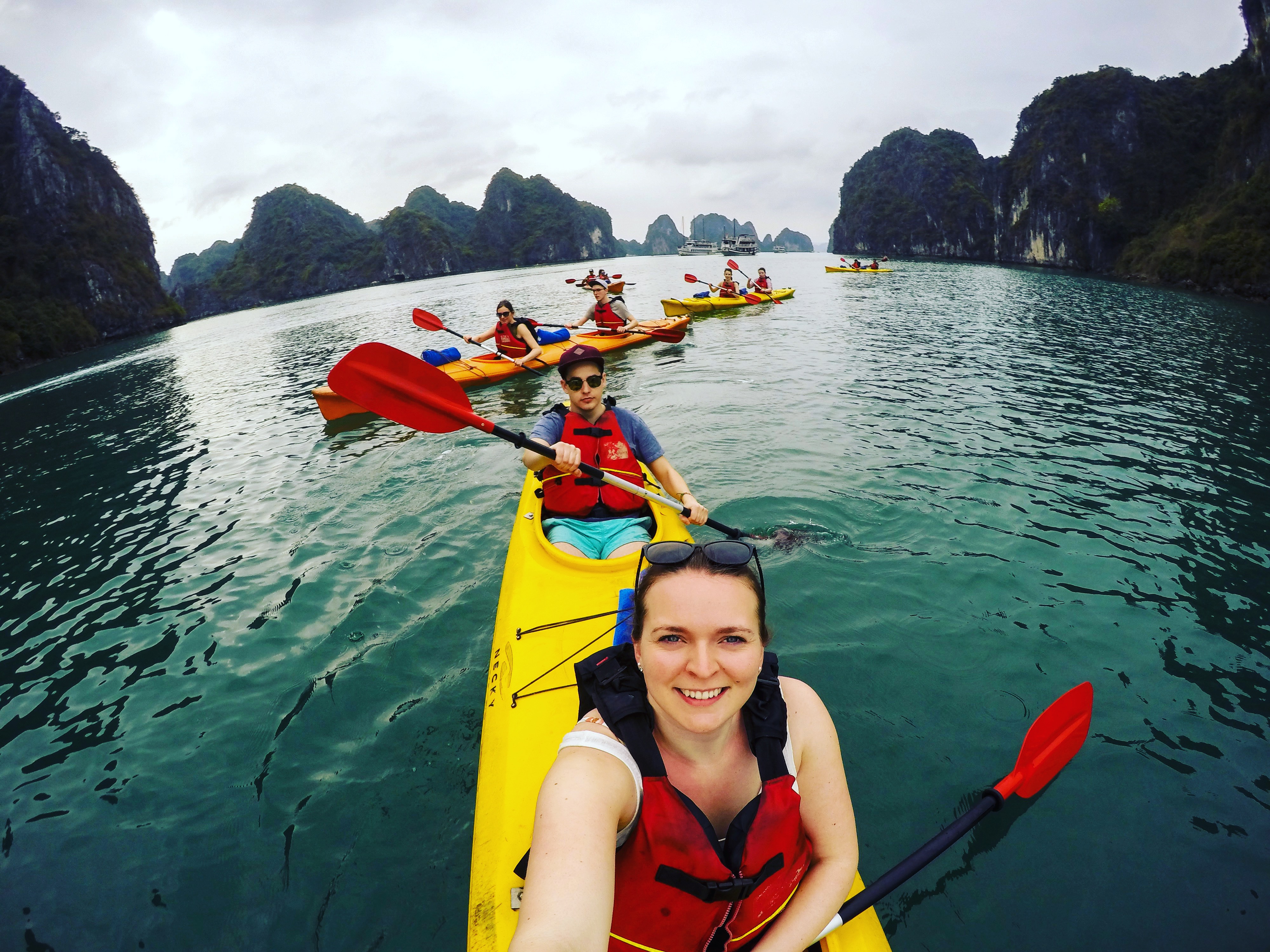 Kayaking © Mira Nausner[/caption] Dry Ha Long Bay & Thanh HoaWhen wevisited the university in Thanh Hoa, we got to know the study situation in Vietnam. Afterwards, some students and lecturers accompanied us to lunch and to Sam Son Beach, where we stayed for a short time.in the dry Ha Long Bay, the guide took us to temples and pagodas (we now know the difference very well). The sampan tour - a short boat trip through untouched countryside under cave-like rocks - was also fascinating despite the rainy weather.Mai ChauThehomestay of the Minh Tho family, who belong to the Tay ethnic minority, was our stop the following day. Probably the least touristy accommodation of the excursion. The host family took us shopping at the local market, showed us how to prepare the food we bought there in Vietnamese and drank homemade rice schnapps with us. It was super exciting to get to know their lives and of course the surrounding villages better.[caption id="attachment_1082" align="alignnone" width="808"]
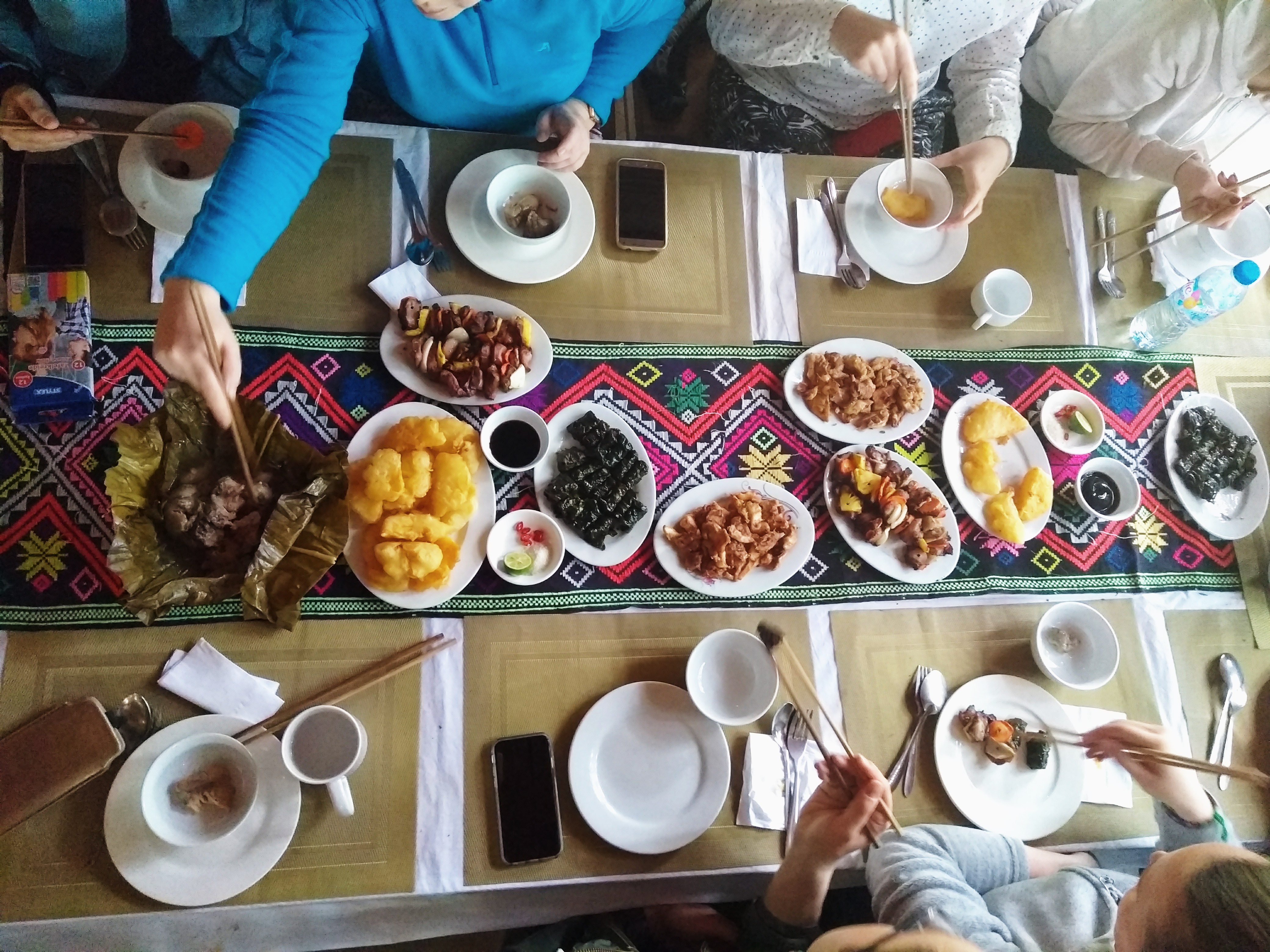 Vietnamese cuisine © Arlene Gärtner[/caption] Pu Luong Probably the most beautiful hike (and we had quite a few) was the one in the Pu Luong nature reserve. The penultimate stop on our round trip. This was partly due to the fact that the rice fields here were particularly photogenic and the variety of idyllic landscapes, small villages and water wheels along the way was the most successful.HanoiBackto the beginning: Our last item on the program ended where we started. After an elaborate identity check, we were allowed to enter the embassy grounds. We had a meeting with the head of the cultural and press department, who patiently answered our questions about the country and its people to the degree of our excursion.The visit to the floating villages in Ha Long Bay or the overnight stay in a homestay - these are just some of the many highlights that we will probably remember for a long time.Impressive people, exciting anecdotes about the country's culture and good food were encountered every day. The excursion gave us an even more differentiated view of the world and enabled us to apply our intercultural skills. After the trip, we will now be able to put all of our experiences and adventures into practice in a project - we are looking forward to seeing how it turns out.