
Experience Report on the DAAD-PROMOS Scholarship
Reason for the stay: Semester Abroad
Country of stay: Indonesia
Institution: Udayana University
Degree programme: Economics and Business
Period of stay: September 2, 2019 – December 18, 2019
Last year, I spent a three-and-a-half-month semester abroad in Bali at Udayana University. This study abroad experience is part of my master’s program in International Tourism Management at the University of Applied Sciences Zittau/Görlitz. The program includes a mandatory semester abroad. It quickly became clear to me that I would love to spend this semester in Bali, as it’s a once-in-a-lifetime opportunity.
Before such a big trip can actually become a reality, it requires good preparation.
First, I had to decide on a study program. I chose Studies Network because numerous students from my university had already selected this program. I was also drawn to the courses offered.
Once the choice was made, the application process began. Studies Network makes this process very user-friendly. I filled out the online registration form and attached the necessary documents, a statement of purpose, and a passport photo.
This is where the first costs come into play: the registration fee. The costs and how to finance them must never be overlooked in such a major undertaking. You need to be clear in advance about whether and how you can finance your stay.
Within 10 days of submitting the application form, I received my acceptance from Studies Network.
Only now can all further details be addressed.
First, the financing: I applied for the DAAD Promos scholarship and also applied for BAföG (German financial aid for students). I ultimately received both, but I still had to cover a significant portion of the costs myself. Of course, this varies from person to person.
Next, I booked my flights and accommodations and started getting vaccinated. Here, too, it’s important to research in advance exactly which vaccinations you’ll need. I recommend checking with the Tropical Institute and the Robert Koch Institute. Additionally,
, keep in mind that you need to start the process early, as some vaccinations require multiple doses or don’t take effect until a certain amount of time has passed.
You also need to sort out insurance. In addition to my existing insurance policies, I took out long-term international health insurance through the ADAC.
I also needed a visa. However, I couldn’t apply for it until I’d paid my tuition and received my official enrolment certificate. For the visa, I had to fill out and submit numerous documents. I then mailed the documents to the Indonesian Embassy in Berlin. After a good over a week, I received my passport back with the visa. Once in Bali, I had to have the visa extended twice, which incurred additional costs.
Another very important thing is a credit card—you won’t get very far without one. There are many different options, and everyone has to find the one that works best for them.
All that was left was to have my home university fill out the Learning Agreement, and then I was ready to go.
Six days before the semester officially started, I landed in Denpasar, the capital of Bali. From there, I took a transfer—booked from Germany—to my new home for the next few months. I had chosen a small apartment, 15 minutes away from the university. It’s relatively easy to find and book accommodations thanks to the website “Auslandssemester Bali.”
I was overwhelmed by my first impressions of this new country and its culture, which was foreign to me—the heavy traffic, the landscape, the trash, the smog, but also the incredibly friendly people.
During the first few days, I settled in and got my bearings. I rented a scooter—an absolute necessity there—and bought an Indonesian SIM card, which provides good internet coverage everywhere. I also began to explore the breathtaking natural scenery. It’s also important to find out early on where you can safely withdraw money. Good banks are the best option for this. Currency exchange is not recommended due to the numerous cases of fraud.
Just a few days later, even before the official start of the semester, Studies Network held a welcome party. It was a social evening designed for us to get to know each other, but we also received a lot of information about the country and its people.
Two days later, the semester officially began in a large university auditorium. The event lasted several hours and covered many relevant topics. We were introduced to many people, as well as the university’s rules. The class schedule was presented, and mandatory attendance was explained.
In addition, the roles of the Empowerment Teams were explained. These are project groups in which students actively participate. Team assignments are based on the preferences indicated during the application process. I was on the Excursion Marketing team. Field trips took place every Thursday, and our team had to organize at least two of them ourselves. This task proved to be a bigger challenge than expected, since we had to accommodate the wishes of so many people, and many students didn’t want to spend any more money. But in the end, we managed to put together two enjoyable and varied field trips.
My master’s program offered the following courses: Business Economics, Global Project Management, Global Service Marketing, Multinational Entrepreneurship, Intercultural Management, and Intercultural Leadership. I took all of them, even though only five of the six receive recognition toward my degree. In almost all courses, we received lecture notes or study materials. However, some of these were very outdated and no longer aligned with the actual course content.
Starting on the second day, the master’s students were primarily housed in two rooms on the university’s International Campus, which consists of several buildings. However, some of these buildings were under construction at the time. Other degree programs were also housed on this campus. There was also a small campus café. Classes were held Monday through Wednesday, usually from 9 a.m. to 2 p.m.
We often had to wait a long time for the instructors, which was usually due to traffic or poor planning. Sometimes they didn’t show up at all because they were attending a ceremony. This is a good example of just how pervasive religion is in Bali. There’s always a ceremony taking place somewhere, with festive decorations and loud traditional music playing. You can often tell by the clothing many Balinese people wear whether they’re celebrating a festival again. I find it impressive that on this small patch of land, three of the world’s major religions manage to coexist peacefully. The majority of Bali’s population is Hindu, but there are also numerous Muslims and some Christians.
As is the case everywhere in the world, the quality of instruction depends heavily on the instructor.
In Business Economics, the instructor mainly gave us lectures on the economy of Southeast Asia. We also gave group presentations on various economic topics related to this region and prepared supporting documentation.
Global Project Management was very practice-oriented, which was good. Working in groups, we had to find a social enterprise in Bali with which to plan—and, ideally, carry out—a project.
In Global Service Marketing, we had—in my opinion—the most competent instructor, which made for good, informative, and varied classes.
In general, it’s worth noting that classes were taught in English. All the instructors were Balinese, and in some cases it was difficult to understand their English.
What I find very unfortunate about this program is that the class consists only of Germans, which really diminishes the international aspect and exchange.
During the field trips, they tried to introduce us to the country and its people, but it didn’t seem particularly well thought out to me.
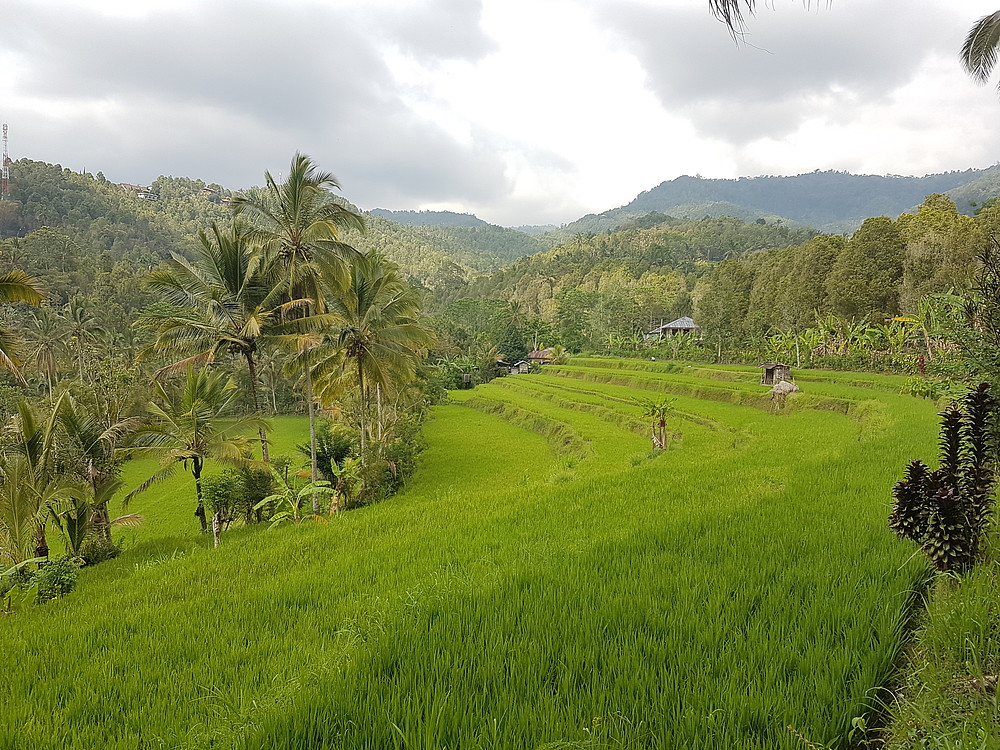
I discovered the most about Bali and its surroundings during my free time, especially during the two-week vacation included in the program. The landscape, the culture, and the people are simply impressive and unique in my eyes.
The semester concluded with the “final exams.” These took the form of either invigilated (written) examinations or short academic papers. The final grades are based on these achievements and the interim work completed in each course.
In conclusion, I can say that I learned a lot about life, though I would have liked to have learned a bit more academically at the university. Also, as I mentioned earlier, the cultural exchange component of the program was too limited for my taste—or rather, it was nonexistent. Therefore, while I would recommend Bali as a place to study, I’d advise future students to also explore other programs.
Ultimately, I’m incredibly grateful for this amazing experience, because I was able to gain wonderful insights that I’ll never forget.