
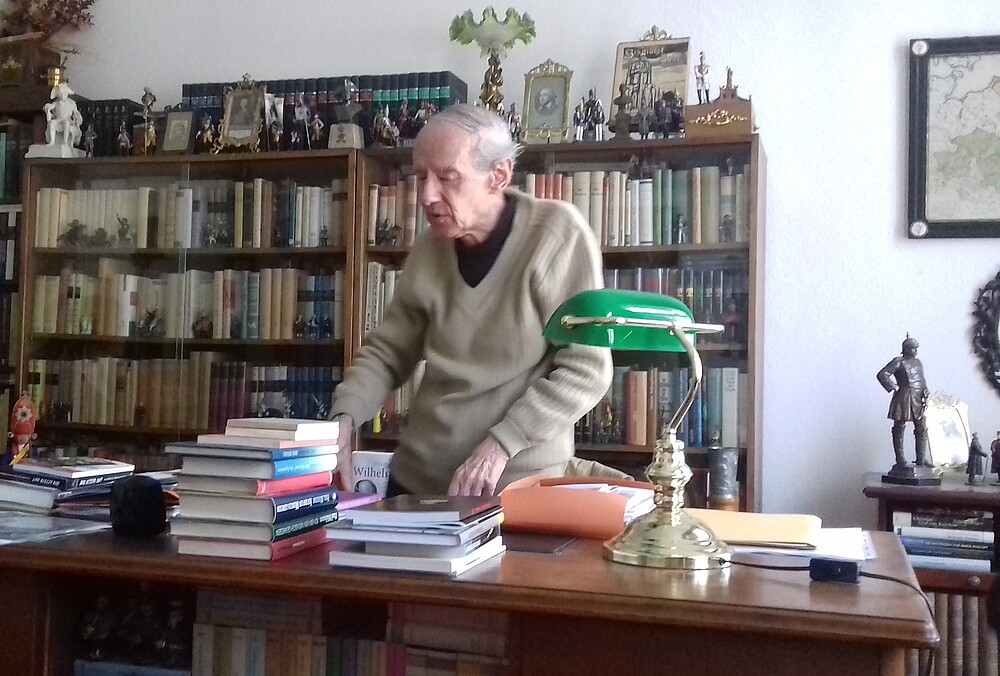
As part of a research seminar on Jewish life and the Jewish heritage of the city of Görlitz, students on the master's degree course in culture and management visited contemporary witness and chronicler Dr. Ernst Kretzschmar. A portrait.
Mr. Kretzschmar is a man with a life's work. An intellectual life's work. How did he get there? He ponders, looks past the questioner. He has combed his hair from one side to the other. You can tell that he has spent a large part of his life sitting at a desk. "My mother always worked in Jewish stores. For Jewish merchants," he says. He doesn't know much about his father. His wish is to find his NSDAP membership card in the Federal Archives in Berlin. Mr. Kretzschmar might then find out more about his father. His profession, his career. It is not as if Mr. Kretzschmar no longer had any areas of research. He was born east of Brandenburg in 1933. That's what he calls it. Most people no longer know the former Prussian territories. In 1935, when he was two years old, Wehrmacht soldiers were stationed in the village. The local residents were supposed to sponsor the soldiers and look after them when they were out. He can remember one soldier. A picture of old Fritz hung in his childhood bedroom. In his current apartment, there are pictures of Fritz, Wilhelm, I and II, Otto and Paul. On the wall opposite are pictures of his parents. And small figures, colorful or made of tin, again of Fritz, Wilhelm I and II, Otto and Paul in front of the numerous books. Where does this Prussian fascination come from? "Well," he says. He grew up in Prussia. Prussia still existed back then. He followed the attempted coup in 1944 in disbelief. He couldn't believe that officers were opposing the army command. When he and his mother were expelled in 1945, he understood even less. His father had already been killed. Probably in Russia. So he came to Görlitz.
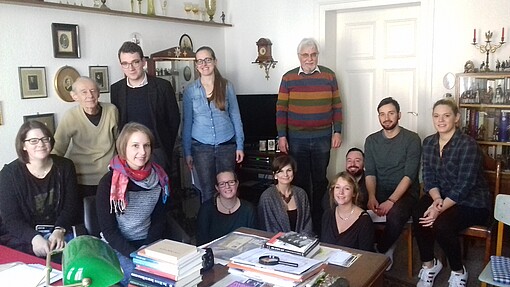
Mr. Kretzschmar wants you to leave your shoes on when you come into his apartment. Unless it's wet outside. Is it wet? No. Then you can leave your shoes on. He goes into great detail with every question, putting personal matters first. Dates, border shifts, people. So how did it come about with the Jews? His mother. And the Protestant youth. They wanted to find out about it for the first time in the 70s. Kretzschmar was working in the municipal art collections at the time. He had to prepare for it, familiarize himself with it. The lecture was planned for 20 people. 200 came. He still raves about it today. He remembers the small room, which was specially heated. Not everyone would have fitted in there. So they moved to a larger one. It was cold, but people didn't care. The subject has stayed with him ever since.
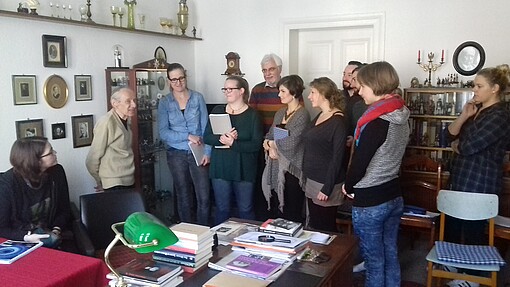
It has stuck with him. It makes him happy when people are interested in history. He always has time for that. You can leave your shoes on for that. A lot has happened in 88 years of life. In 88 years, he has been able to do a lot of research and write a lot. His own publications take up an entire shelf. When the students came to him, due to his health, he wasn't feeling very good, they had to sit on the floor. He didn't have enough chairs, for which he apologizes. But nobody can expect that. So much attention, so much interest. It touched him, he will never forget it. That has never happened in 88 years.
Lukas Rietzschel
Photos: Dr. phil. Sławomir Tryc