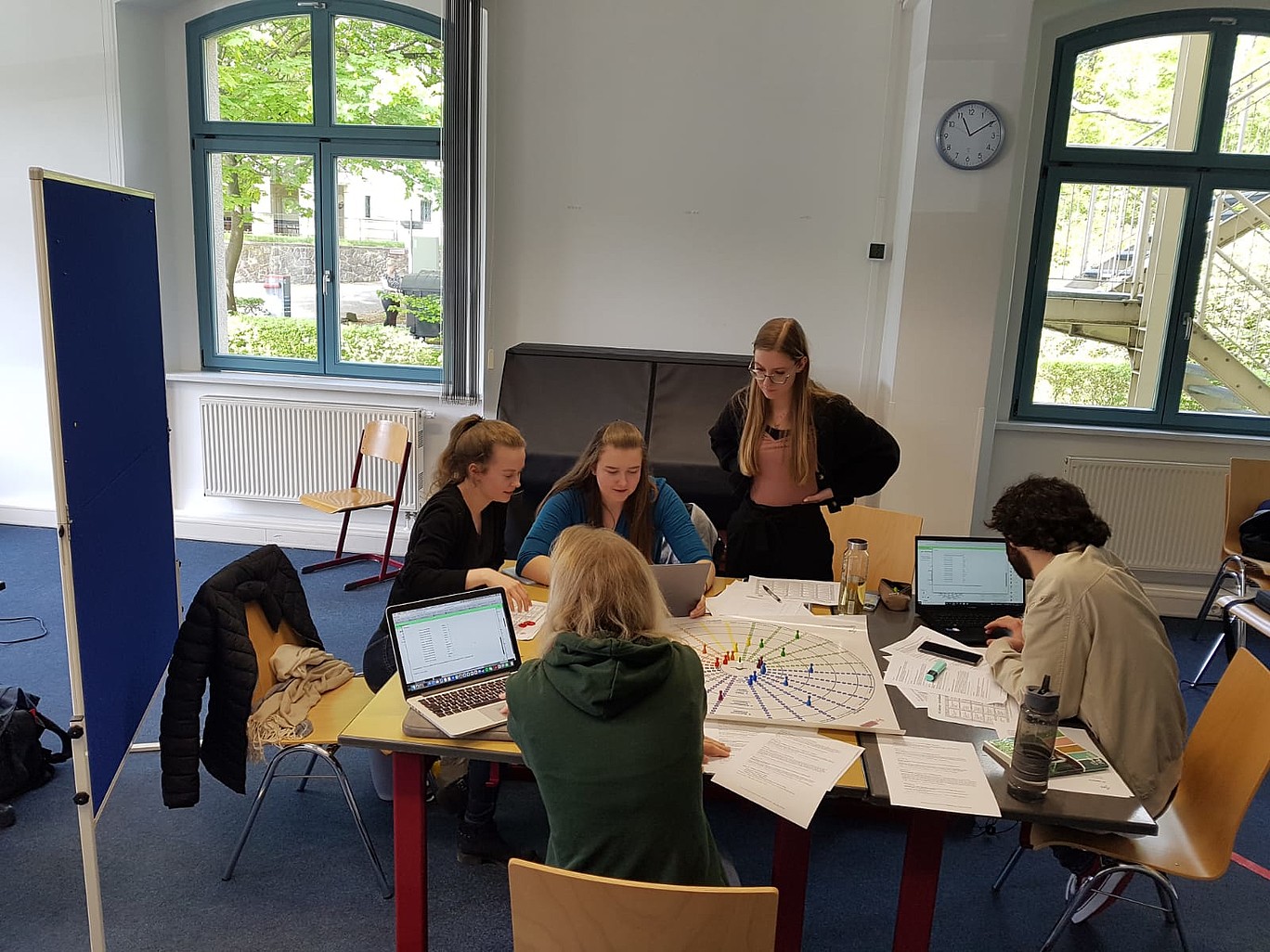
A simulation game as part of the "Market-oriented corporate management and business model transformation" module familiarizes students on the "Health care management" Master's degree course with change management. Take a look to find out how the simulation went, what skills it trained and what it has in common with the Bachelor's program.
Author: Victoria Otto
Not all things are permanent. In the healthcare sector, we are currently experiencing how quickly market and environmental conditions can change, how quickly new companies can enter the market, but also how some firmly established organizations can no longer withstand these conditions. But what can companies do to survive these changes? Unfortunately, this is not easy, as change brings with it reservations, fears and ultimately resistance. Effective change management aims to break down these barriers and make new ways of transformation feasible and enforceable.
In order to provide the managers of tomorrow with the necessary knowledge and the right tools, a simulation game on change management is carried out in the Master's degree program "Health care management". Students can apply and deepen their existing knowledge, but also learn a great deal. The understanding of complex interrelationships is developed in a very clear and practical way as students experience a simulated transformation process. In addition, students develop their team skills through discussions and group decision-making.
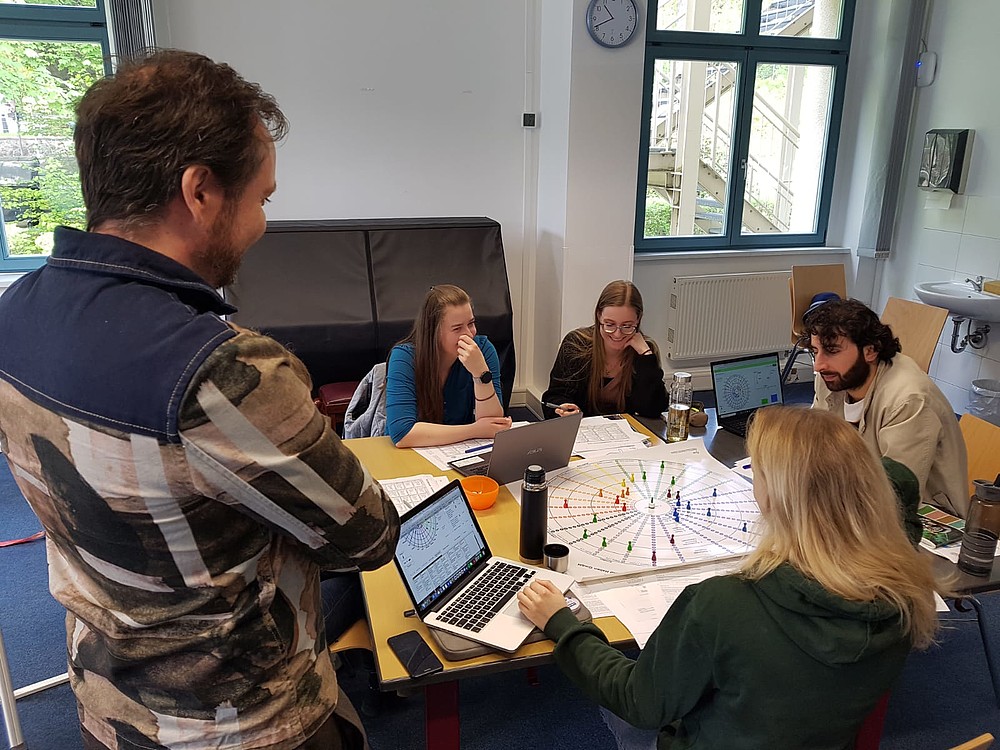
In the current semester, the simulation game was also divided into four units, from the introduction to independent implementation and evaluation. First of all, all participants received a theoretical introduction to change management as well as to the circumstances and process of the simulation game. Before the game began, the group of students was divided into two teams, with each team receiving its own game board and monetary units (bits). Both teams had to play five rounds each, which were combined with evaluation and feedback rounds at the end.
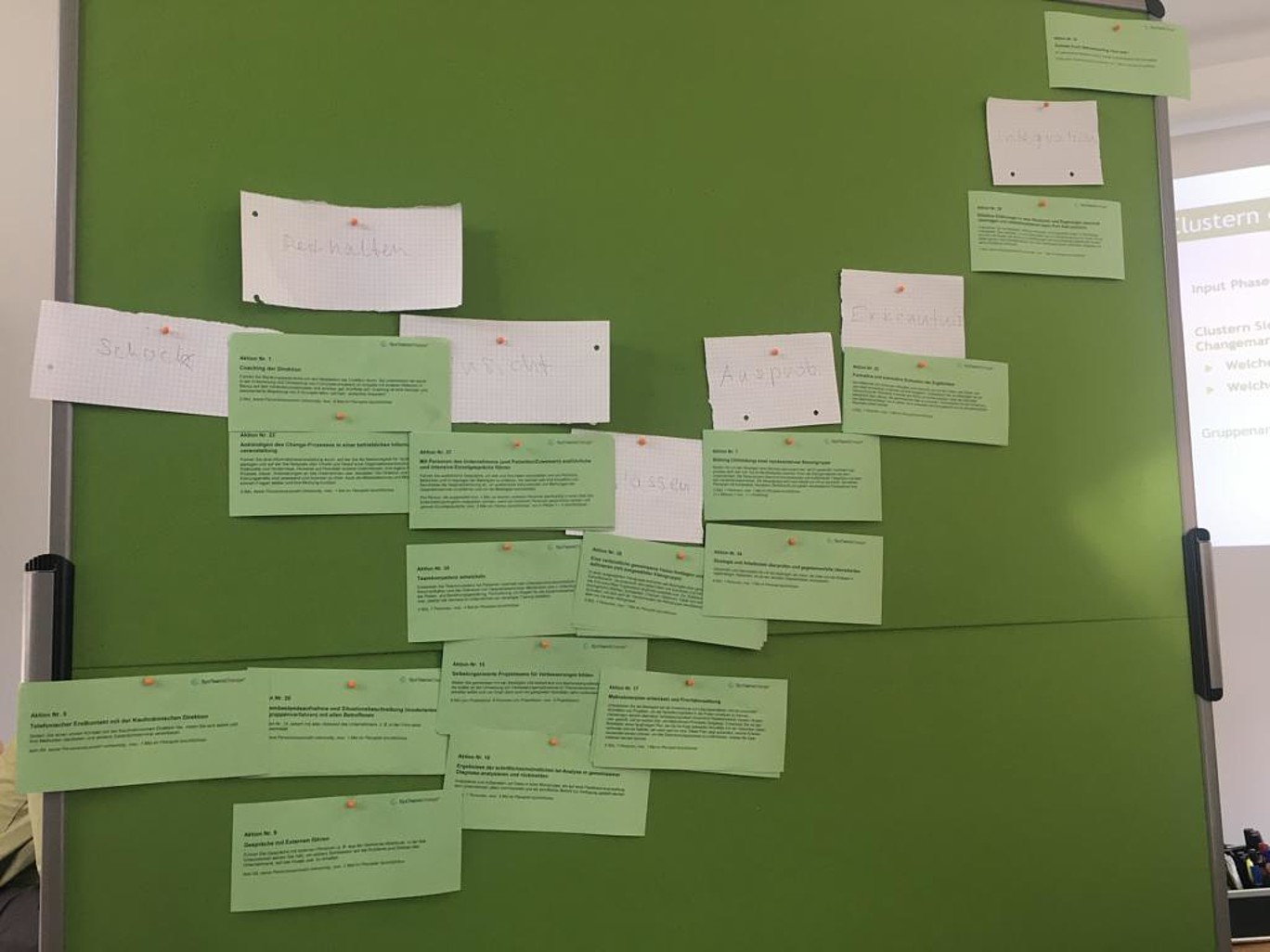
The aim was to move as many of the players as possible from the "shock phase" to "integration" and to collect seven rings for each milestone over the course of the game, taking into account the use of resources. As an aid, the students were given 40 action cards, which had to be used correctly within the seven phases of the change process. The program showed whether the students made their decisions appropriately.
The students had the task of trying out their role as change agents, adapting to the changed situations and acting accordingly, but also being able to assess and analyze wrong decisions appropriately.
The teams had to take the path to the goal on their own, whereby the subsequent evaluation after the five rounds showed that there was no one right solution, as both teams chose a different approach. This path was fraught with challenges in which the students had to clarify how to deal with resistance, which people they should focus on and what effort seemed appropriate when dealing with "troublemakers".
During the seven phases of the change process, the students were able to apply their theoretical knowledge independently and develop an awareness of the complexity of change management. In addition, students' social skills such as the ability to cooperate and work in a team, willingness to compromise and decision-making skills and their consequences were tested intensively. Above all, it was important to learn from mistakes and not to despair immediately.
This simulation game is part of a wide range of practical learning content in our Master's degree program in health care management . Find out more here!