
A quarter-century after the social upheaval of 1989–1990, the post-socialist transformation process in the countries of Eastern and Central-Eastern Europe is still not complete—yet this region is already facing its next social challenge: an aging population. In contrast to Western European societies, Eastern Europe has only slightly more than a generation to address the radically changing social conditions of a rapidly aging society resulting from demographic change. While Germany and Italy are currently Europe’s most aged societies—with more than 20 percent of their populations aged 65 and older—Eastern Europe will surpass them in this regard in the second half of the 21st century: By 2060, 36% of the Latvian population, 35% of the Romanian population, and more than 34% of the Polish population will be 65 and older, compared to just under one-third in Germany (Eurostat, 2011).
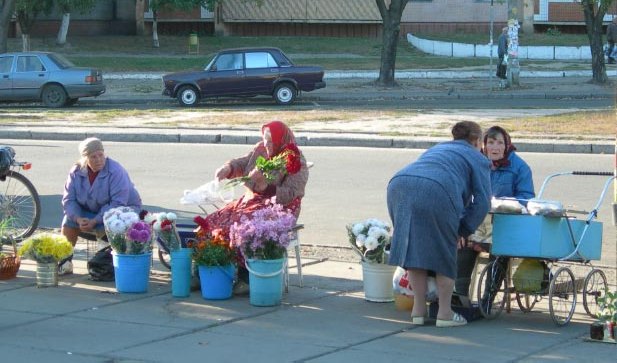
The conditions for a successful adjustment process in Eastern Europe are extremely unfavorable: While Western Europe became prosperous and was able to establish comprehensive social welfare systems before its population aged, Eastern Europe will age before it has had the opportunity to become prosperous and establish adequate social welfare systems. Added to this are two decades of low birth rates and massive emigration of the younger generation. This particularly affects rural areas in Eastern and Central-Eastern Europe, where entire regions are becoming increasingly depopulated.
“The Depopulation of Rural Areas in Eastern/Eastern Central Europe: Causes, Consequences, and Possible Solutions” is the topic of an international workshop to be held on June 12–13, 2015, at the Faculty of Social Sciences, jointly organized by the Oxford Institute of Population Ageing at the University of Oxford and the Research and Teaching Unit for Social Gerontology. This long-standing collaboration is based on the EAST research network—“Eastern-European Ageing Societiesin Transition”—
 www.ageing.ox.ac.uk/research/regions/europe/east
Please refer to the attached program for further details. You are cordially invited to attend this conference. To help us estimate the number of participants—particularly for catering purposes—please register with Katja Knauthe at k.knauthe(at)hszg.de by June 8.
<media download final programme east workshop goerlitz june><img src="fileadmin/template/HSZG/imgs/access_icons/download.gif" alt="undefined">Flyer for download</media> (pdf)
Contact:
Prof. Dr. Andreas Hoff
Professor of Social Gerontology
Faculty of Social Sciences
Phone: 03581/4828186
Email: a.hoff(at)hszg.de