
When wool becomes a challenge
Anna, a student of ecology and environmental protection, shares her experiences from her work placement semester at the Eastern Upper Lusatia Nature Conservation Station.
What do we use sheep’s wool for? And where does it come from? Anna has been exploring these and similar questions over the past few weeks as part of her work placement semester in the Ecology and Environmental Protection degree programme at the Östliche Oberlausitz Nature Conservation Station. In the process, she has taken an in-depth look at the topic of “marketing sheep’s wool.”
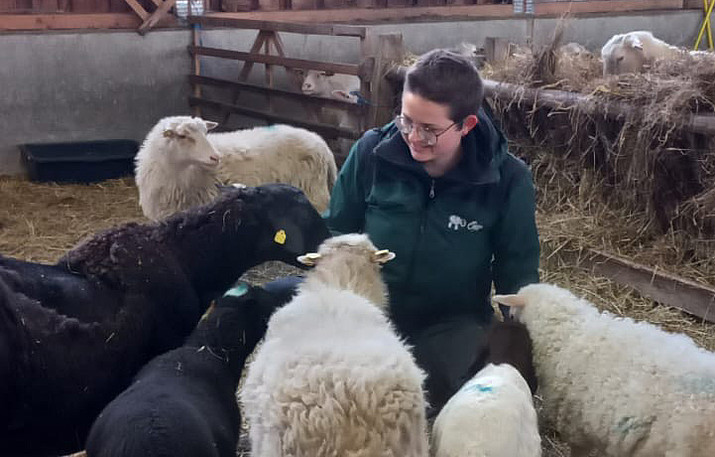
Here, on the edge of the biosphere reserve, I not only explore the potential of wool as a raw material—a unique natural fiber that deserves more attention—but also support the team at the nature conservation station in landscape management, environmental education, and various species conservation projects, such as monitoring the amphibian protection fence.
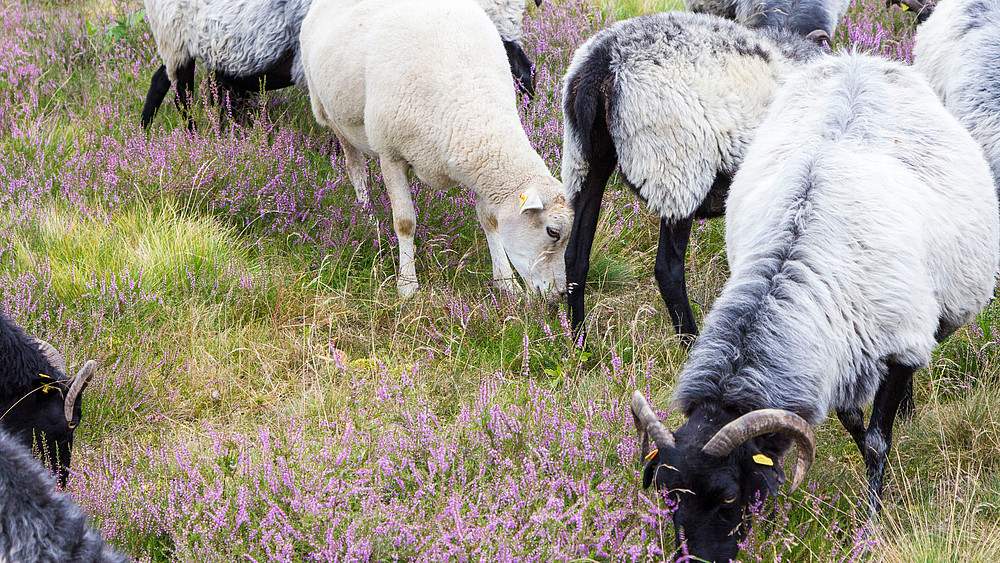
The nature conservation station is currently unable to dispose of the wool from the more than 300 moor sheep (Ovis aries (ammon) f. aries) that maintain the landscape each year in the Upper Lusatian Heath and Pond Landscape Biosphere Reserve. This is because, according to Regulation (EC) No. 1069/2009, wool is a Class 3 animal by-product, which means it falls under the category of hazardous waste and must be disposed of at a cost. To draw attention to the problem of marketing wool, MDR Saxony came to us for an interview. Click here for the article
I think it’s great to learn which interest groups are drawn to the topic of sheep’s wool and to find solutions for making wool an attractive raw material again in the future with the help of a wide variety of institutions. After all, nature conservation doesn’t begin in meadows teeming with biodiversity (like those in our biosphere reserve), but much earlier.

2nd upper floor