From April 20 to 22, 2018, the HSZG invited 28 families to a special gathering on the campus in Görlitz. What they all have in common is that their family includes a member with what is known as Williams-Beuren syndrome (WBS). WBS is a rare, genetically caused developmental disorder that is typically associated with an intellectual disability and results in a lifelong need for care. To cope with daily challenges, those affected and their families need a strong support network. Prof. Dr. Ingolf Prosetzky, a professor in the Faculty of Social Sciences in the Department of Special Needs Education/Inclusion Studies, is a specialist in the syndrome.
Together with Diplom Psych. Vera Danielsmeier (research assistant and doctoral candidate at the TRAWOS Institute) and eight students in Special Needs Education, they have been conducting research since October 2016 as part of the “WBS in Resonance” group on educational issues relevant to daily life. Through this family gathering, the group is committed to building a strong network among families, professionals, and researchers in the region.
People affected by this rare disease are also considered “orphans of medicine.” Doctors, educators, and therapists are generally unfamiliar with WBS, making it difficult for affected families to get the help they need for their specific situations. The specific profile—comprising medical issues (heart defects), strengths (interest in music, empathy, friendly disposition), and challenges (logical thinking, social vulnerability, anxiety, depression, impulse control) presents those affected with unique challenges every day. The goal of the event was to provide individuals with WBS, their family members, and professional caregivers from the states of Saxony and Saxony-Anhalt with a forum to exchange experiences with others affected by the condition in their local area, as well as to receive information from specialists in clinical practice and research. The aim was to create a social self-help network that specifically incorporates regional structures and state-specific regulations. A nationwide network cannot achieve this within this specific framework.
It was the first meeting of this scale in the new federal states. With 20 speakers and numerous volunteers from the Faculty of Social Sciences, approximately 130 people attended the meeting. The meeting was organized and conducted in close collaboration with the Federal Association for Williams-Beuren Syndrome e.V.
The project was primarily funded through the AOK Plus self-help grant program. Thanks to the generous trust and commitment of AOK Plus, it was possible to implement the extensive program for the number of participants. In addition, AOK Plus covered a large portion of the families’ lodging costs. This ensured that no financial barriers stood in the way of the participating families.
The four Special Needs Education students—Caroline Möbius, Jasmin Eisold, Nancy Pätzold, and Sonja Jähnig—organized the event as part of their project study. The project was led by Prof. Dr. Ingolf Prosetzky and Diplom Psych. Vera Danielsmeier. To ensure the gathering was tailored to the families’ wishes and needs, the project group sent out a questionnaire at the end of last year. These results helped them estimate the number of participants and their interests in advance.
On Friday, participants enjoyed a guided tour of Görlitz; on Saturday and Sunday, there were lectures, workshops, and discussions with experts. There was also time for conversations and informal networking in a family-like setting. An age-appropriate entertainment and childcare program was offered alongside the main events, allowing caregivers to participate fully in the activities.
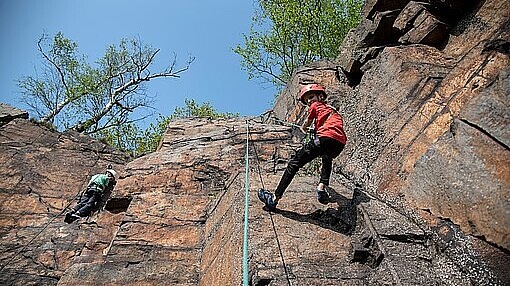
The visitors actively took advantage of the various activities, allowing the professionals to benefit from their experiences as well. The children and teenagers also had a lot of fun with the numerous recreational activities, such as rock climbing, a visit to the zoo, music workshops, and many more. But it wasn’t just the participants—the student volunteers also thoroughly enjoyed the gathering and were able to gain some practical experience.
Evaluation forms from the student project group showed that the goal of the gathering—to provide families with a forum for exchange—was achieved. Special thanks also go to the sponsors: Edeka Schneider from Kodersdorf, Kaufland Görlitz, daycare provider Doreen Pätzold, and the Landskron Brau-Manufaktur Görlitz for the in-kind donations they provided, as well as the Skoda dealership in Görlitz (owned by R. Kohli) and the Sparkasse Oberlausitz-Niederschlesien for their monetary donations.