
According to the “2016 Profile Data on the Internationality of German Universities,” HSZG ranks among the top universities.
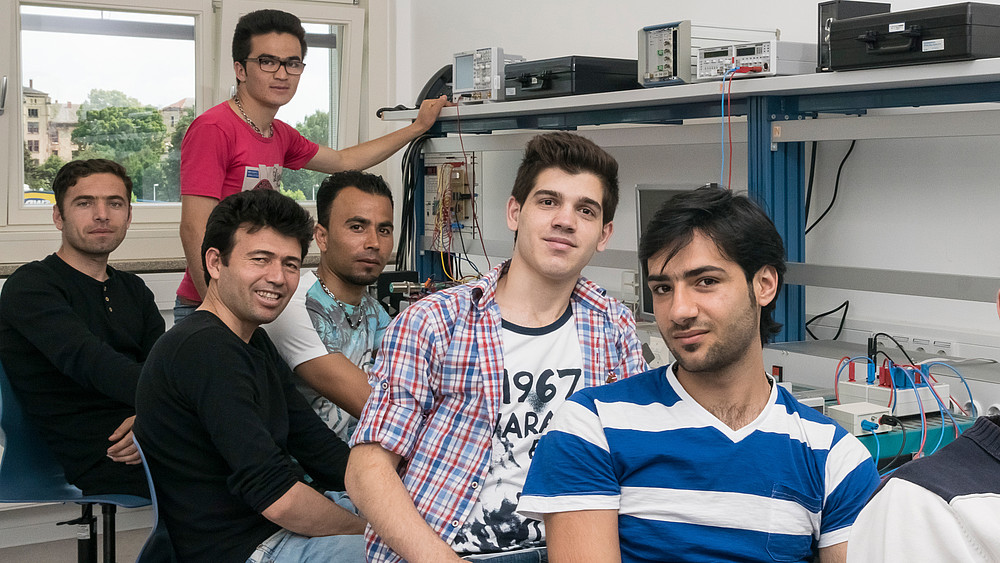
The proportion of international students at HSZG has always been higher than average compared to other universities of similar size. As shown in the latest “Profile Data on the Internationality of German Universities 2016, ” a joint study on the topic published by the DAAD, the HRK, and the Alexander von Humboldt Foundation, the percentage of international first-time students at HSZG in the 2014 academic year was again significantly higher than the Germany-wide average of 3.8% in the same reference group, at 11.2% (ranking 4th among 57 universities of applied sciences with up to 5,000 students). The regions of origin for HSZG students are Europe (78.5%), Asia (13.5%), Africa (6.2%), and South and Central America (1.8%).
Even though a high enrollment rate is initially a positive sign, it is only after students obtain their degrees that it becomes clear whether this translates into graduation rates. Unfortunately, experience shows that the risk of dropping out is particularly high among international students for a wide variety of reasons. For this reason, the HSZG has established various comprehensive support programs in recent years to mitigate the increased risk of dropping out. The results of the DAAD/HRK study now show that these programs are increasingly successful, as evidenced by the student groups leaving the HSZG with a Bachelor degree certificate after successfully completing their studies: In 2014, the proportion of international graduates—at 17.9%—was higher than at any other German university in this reference group.
Apart from the goal of increasing student and graduate numbers in general, the HSZG is thus also working toward implementing another key objective from Saxony’s Higher Education Development Plan 2025: According to this plan, Saxony’s pool of first-year students alone will not be sufficient to meet the state’s demand for skilled workers. For this reason, it is essential to continue attracting students eligible for higher education from other countries and states to pursue successful studies in Saxony. The corresponding support services and their expansion are therefore important tools for achieving these goals.